Research Article - (2025) Volume 16, Issue 4
Comparison of hand eye coordination among students with and without text neck syndrome
Yasmeen Imtiaz*
Department of Physiotherapy, SRM College of Physiotherapy, Tamil Nadu, India
*Correspondence:
Yasmeen Imtiaz, Department of Physiotherapy, SRM College of Physiotherapy, Tamil Nadu,
India,
Email:
Received: 29-Sep-2024, Manuscript No. IPJNN-24-15236;
Editor assigned: 01-Oct-2024, Pre QC No. IPJNN-24-15236 (PQ);
Reviewed: 15-Oct-2024, QC No. IPJNN-24-15236;
Revised: 14-Aug-2025, Manuscript No. IPJNN-24-15236 R);
Published:
21-Aug-2025
Abstract
Background: In this era of technology, smartphones are inevitable. Apart from the merits, there are several health related demerits if smartphone usage became an addiction. Text neck syndrome is one of the problems, which arises due to excessive smartphone addiction. It is a repetitive strain injury around the neck and upper back, which leads to discomfort and difficulties while performing various activities. Handeye coordination is essential for daily activities such as writing and has been shown to be impacted by severe neck problems such as cervical radiculopathy. However, due to a lack of evidence, it is unclear whether it is affected by text neck syndrome.
Objective: To compare the hand eye coordination among students with and without text neck syndrome. Methods: 150 students between the ages of 18 and 30 were selected, screened for text neck syndrome and divided into 2 groups, group A with text neck syndrome and group B without text neck syndrome. Hand eye coordination in both the groups was assessed and compared. Results: Statistical analysis was done using SPSS version 26. The result shows higher mean score among students without Text neck syndrome with a mean difference of 3.84 in the wall ball bounce task with a significance of p<0.05.
Conclusion: This study concluded that there is a significant reduction in the hand eye coordination of the subjects with text neck syndrome, when compared to subjects without text neck syndrome.
Keywords
Text neck syndrome; Smartphone addiction; Neck disability; Neck pain; Nomophobia; Hand eye coordination
Introduction
In the contemporary period that we live in, technology is integral to every person's daily activities. From basic needs like communication, education and entertainment to advanced uses like manufacturing and providing health care services technology becomes an essential and irresistible part of everyone’s life. Nowadays people are using various forms of technologies, out of which smartphones are the most common form. Almost everyone is having a smartphone nowadays. Previously mobile phones were used as a communication device, but the emergence of smartphone technology changed its purpose. The usefulness of smartphone made people smartphone dependent and this dependency now turned into addiction. Though being a productive tool, overuse of smartphone has its own ill effects too.
Smartphone addiction, also known as nomophobia affects the individual’s life style in various forms by increasing loneliness and depression, fueling anxiety, increasing stress, causing attention deficit disorders, sleep disturbances, sedentary lifestyle. One of the common issues faced by the person addicted to mobile phone is Neck pain [1].
Text neck syndrome describes neck pain brought on by overuse or repeated stress injuries. It is caused by neck flexion, which occurs when a person looks down at a cell phone or other digital device for an extended period of time (such as a tablet or laptop). Dr. Dean L. Fishman, a chiropractor from the US, initially used the term "TEXT NECK" [2].
Text neck syndrome is one of the emerging problem in the modern society and a study by Kumari S et al., refers it as ‘The Pain of Modern Era’ [3]. The prevalence rate of text neck syndrome was 47% among students in India and because of increase in addiction level, the prevalence of the condition is also increasing [4].
After COVID curfews and online classes, smartphones became an even more important part of day-to-day activities of students including in studies. Hence, the risk of acquiring the text neck syndrome is also high.
The pressure applied over the spine changes for different neck flexion angles. Using smartphone within 15° of neck flexion will have less impact on the neck due reduced activation of the muscles around the neck [5]. Increase in the neck flexion angles stresses the spine more and leads to overuse of muscles and fatigue. Continuously repeating poor posture and ergonomics will cause repeated stress/strain injury, referred as text neck syndrome [6].
Symptoms of text neck syndrome includes sharp and nagging pain around the neck and shoulder, reduced cervical range of motion, intermittent and constant headaches, tingling and numbness of upper limb, poor grip strength and forward head posture [7]. Along with physical ailments, psychological implications like depression, anxiety, and poor self-efficacy are also observed in text neck syndrome [8].
The ability to regulate, guide, and steer the mind of the hand in order to do a certain job, such as writing or catching a ball, is known as hand-eye coordination. It is a necessary human ability that can have an impact on a variety of facets of daily living, such as academic performance, routine activities, and interpersonal relationships [9].
Any impairments of motor system of upper limb will lead to reduced hand eye coordination. If a person’s hand eye coordination is impaired, it may lead to developmental disorders, learning disorders, problems in professional areas and coordination impairments. However, neck related problems are not considered as a potential cause.
Nevertheless, in a study done it is proven that in individuals with severe neck pain, the reaction time is higher when compared with individuals without any neck related problem. This reduced reaction time will reduce the hand eye coordination of the individual and makes various activities of daily living difficult [10].
Some other studies suggest that, neck related problem, especially conditions like forward head will slower the conduction and attenuation of afferent impulses, which may affect normal functioning of the person [11].
A study done by Senthil K et al., found that hand eye coordination is affected in cervical radiculopathy patients. However, in the same study he also mentioned that non-specific neck pain would not affect the hand eye coordination [12].
Text neck syndrome differs from other neck pain since it is not a non-specific neck pain and it is not a serious condition like cervical radiculopathy. Text neck syndrome is a repetitive stress injury, which is chronic and progressive in nature. Since text neck syndrome is also a cervical related problem, it may possibly impair the hand eye coordination.
There is no clear evidence or proof whether text neck syndrome affects the hand eye coordination or not, since no studies were done before. The study's goal is to compare students with and without text neck syndrome in terms of their hand-eye coordination. Because many studies suggest that hand eye coordination is affected in neck- related problem. Especially in severe conditions like cervical radiculopathy it is proven that hand eye coordination is impaired. However, hand eye coordination was not compared in any previous studies on text neck syndrome. Therefore, this study is conducted to compare the hand eye coordination among students with and without text neck syndrome. This study is linked with the third Sustainable Development Goal (SDG) to transform the World i.e., good health and wellness of human beings.
Materials and Methods
An observational study for was conducted with 150 samples75 in group A with text neck syndrome and 75 in group B without text neck syndrome) in and around Chengalpattu district. Institutional Ethical Committee (IEC) of SRM Medical College Hospital and Research Centre approved the study with IEC clearance no: SRMIEC-ST0922-129. The principles of declaration of Helsinki were adhered and informed consent was obtained from all the participants in a written format.
Participants
Participants included in group A were a) Students b) 18 to 30 years’ age c) Both men and women d) Men scoring greater than 33 in SAS SV and women scoring more than 31 with more than 5 in NDI simultaneously is included in the group with text neck syndrome. Participants included in group B were were a) Students, b) 18 to 30 years’ age, c) Both men and women, d) Men scoring less than 33 in SAS SV and women scoring less than 31 with any score in NDI simultaneously is included in the group without text neck syndrome. The participants having a) History of pain in dominant upper limb, b) History of fractures in dominant upper limb, c) Recent head injury, d) Trauma to dominant upper limb, e) Peripheral nerve lesions, f) Degenerative diseases of neck like cervical spondylosis, g) Uncorrected vision related problems (Figure 1).
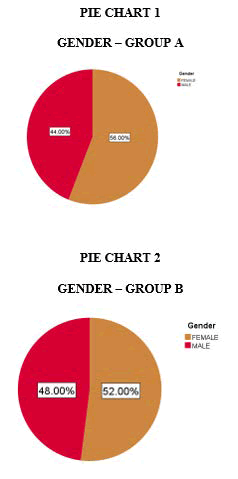
Fig. 1. Gender breakdown: group A vs. group B.
Procedure
A short assessment of demographic data was obtained. Two questionnaires, neck disability index and the smartphone addiction scale: Short version, were used to diagnose text neck syndrome [13,14]. These two questionnaires were distributed to the selected students and the scores will be calculated. An individual getting a score of above 33 in SAS SV questionnaire along with a score greater than 5 in neck disability index was identified to be a person with text neck syndrome and others were considered as persons without text neck syndrome. Group A of 75 participants with text neck syndrome and group B of 75 participants without text neck syndrome was formed. Hand eye coordination was measured by a task namely wall ball bounce task.
Outcome measures
Smartphone addiction scale: Short version
• It is a condensed version of the smartphone addiction Scale with 10 items that address how smartphone addiction affects day-to-day life.
• Each item is scored in a six-point scale from one (strongly disagree) to six (strongly agree). A total score of 60 will be there and men scoring 33 or above and women scoring 31 or above out of 60 is considered to be addicted to smartphone a) Validity=0.911; b) Sensitivity=0.875; c)Specificity=0.886.
Neck disability index
• The neck disability index is a questionnaire created to gather data on the severity of pain and how it impacts everyday activities.
• There are ten sections in the questionnaire. Each section is graded on a scale of 0 to 5, with 0 denoting "No discomfort" and 5 denoting "worst pain possible". Adding up points to get a final score.
• The test can be interpreted as a raw score, with a maximum score of 50.
• Some benchmarks can be found in literature
1. 0-4 points (no disability),
2. 5-1 points (mild disability),
3. 15-24 points (moderate disability),
4. 25-34 points (severe disability),
5. 35-50 points (complete disability)
6. Validity=0.9211
Wall ball bounce task
• Materials required–Tennis ball, stopwatch, metre tape, materials to record score.
• Subject position–Standing in front of wall.
• Therapist position–Standing beside the subject.
• The participants will throw a tennis ball onto a wall from a distance of 2 metres while standing still. The subject had to successfully return the ball with a single hand catch without any stumble. The subject's success rate in completing the task in 60 seconds should be counted. The dominant hand should be used for the task. The task should only be completed once, and the result will be analysed statistically.
1. Validity=0.718
2. Reliability=0.875
Data analysis
The collected data were analyzed using the IBM Statistical Package software for Social Science (SPSS) v26.0 to assess all parameters of the descriptive statistics, mean and standard deviation of the Wall ball bounce task obtained by the participants of group A (subjects with text neck syndrome) and group B (subjects without text neck syndrome) (Figure 2-4).
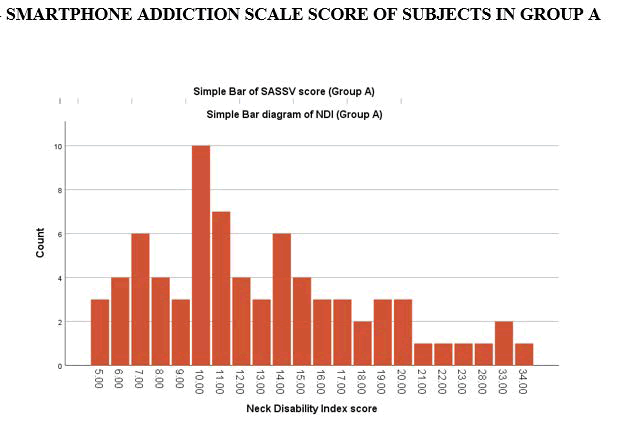
Fig. 2. Smartphone addiction scale score of subjects In group A.
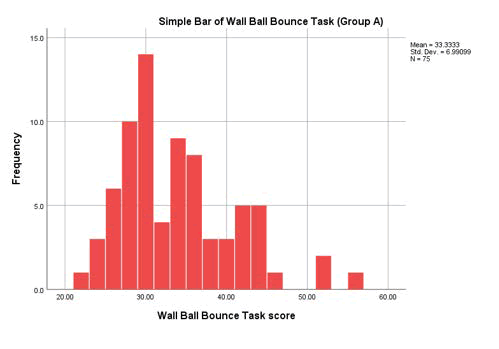
Fig. 3. Wall ball bounce task of group A.
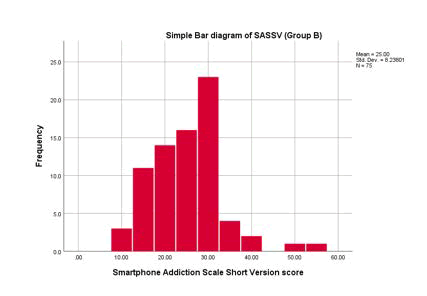
Fig. 4. Smartphone addiction scale score of subjects in group B.
Results
From Table 1, the mean age of 42 (56%) male and 33 (44%) female participants in Group A is 20.67. From Table 2, the mean age of 36 (48%) male and 39 (52%) female participants in group B is 20.60. According to Table 3, the mean value of wall ball bounce task obtained by group A (Subjects with text neck syndrome is) 33.33 which is a quantitative indication of the hand eye coordination of the subjects in group A. From the Table 4, the mean value of wall ball bounce task obtained by group B (Subjects without text neck syndrome) is 37.57 which is a quantitative indication of the hand eye coordination of the subjects in group B. From Table 5 it is evident that there is difference in the hand eye coordination between the two groups. In addition, the independent t-test value from Table 5 shows p=0.0001, which is less than 0.001 indicating the difference between the means of the two groups, is highly significant. Thus, the result shows a statistically significant difference between the mean values of the wall ball bounce task of subjects in group A and group B.indicating the difference between the means of the two groups, is highly significant. Thus, the result shows a statistically significant difference between the mean values of the wall ball bounce task of subjects in group A and group B.
| Demographic variables |
Minimum |
Maximum |
Mean |
SD |
| Age |
18 |
25 |
20.67 |
1.32 |
| Gender |
Male |
42 (56%) |
| Female |
33 (44%) |
Tab. 1. Demographic data of group A (subjects with text neck syndrome).
Table 1 shows the mean age of 42 (56%) male and 33 (44%) f e m a le participants in group A as 20.67.
| Demographic variable |
Minimum |
Maximum |
Mean |
SD |
| Age |
18 |
23 |
20.6 |
1.01 |
| Gender |
Male |
36 (48%) |
| Female |
39 (52%) |
Tab. 2. Demographic data of group B (subjects without text neck syndrome).
Table 1 shows the mean age of 36 (48%) male and 39 (52%)female participants in group B as 20.60
| Scale |
N |
Minimum |
Maximum |
Mean |
SD |
| SAS SV score |
75 |
33 |
58 |
42.51 |
6.71 |
| NDI score |
75 |
5 |
34 |
13.25 |
6.34 |
| Wall ball bounce task |
75 |
22 |
55 |
33.33 |
6.99 |
Tab. 3. Mean and standard deviations of sas sv score, ndi score and wall ball bounce task of group A.
Table 3 shows the mean and standard deviation of the SAS SV scale, NDI scale and the Wall ball bounce task recorded in subjects of group A.
The smartphone addiction scale short version shows a mean and standard deviation of 42.1 and 6.71 with a least score of 33 and a best score of 58 obtained by participants of group A indicating all the participants of group A are addicted to smartphone.
The mean and standard deviation of neck disability index of group A is 13.25 and 6.34 with a minimum value of 5 and maximum value of 34 indicating mild to severe disability of the participants.
From the minimum scores obtained by the participants of group A in SAS SV and NDI, it is evident that all the participants are having text neck syndrome.The mean value of the wall ball bounce task of group A is 33.33 with a standard deviation of 6.99.
| Scale |
N |
Minimum |
Maximum |
Mean |
SD |
| SAS SV score |
75 |
10 |
57 |
25 |
8.23 |
| NDI score |
75 |
0 |
26 |
6.71 |
5.75 |
| Wall ball bounce task |
75 |
25 |
50 |
37.57 |
6.25 |
Tab. 4. Mean and standard deviations of SAS SV score, NDI score and wall ball bounce task of group B.
Table 4 shows the mean and standard deviation of the SAS SV scale, NDI scale and the Wall ball bounce task recorded in subjects of group B.
The smartphone addiction scale short version shows a mean and standard deviation of 25 and 8.23 with a least score of 10 and best score of 57 obtained by participants of group A.
The mean and standard deviation of neck disability index of group A is 6.71 and 5.75 with a minimum value of 0 and maximum value of 26 indicating mild to severe disability of the participants.
These scores indicates that some subjects in group B are addicted to smartphone and some are having neck disability. However, no subjects are having both the scales positive, making them a part of group B that is subjects without text neck syndrome. The mean value of the Wall ball bounce task of group A is 37.57 with a standard deviation of 6.25.
| Scale |
N |
Minimum |
Maximum |
Mean |
SD |
| SAS SV score |
75 |
10 |
57 |
25 |
8.23 |
| NDI score |
75 |
0 |
26 |
6.71 |
5.75 |
| Wall ball bounce task |
75 |
25 |
50 |
37.57 |
6.25 |
Tab. 5. Independent sample t-test.
Discussion
Text Neck syndrome is one of the conditions, which is recondite, since it is a problem of modern generation. Since it is a ‘Pain of modern era’, only few studied were conducted about it. People who are unaware of the dangers of excessive smartphone use are at risk of developing text neck syndrome.
Smartphone addiction, the leading cause of text neck syndrome, is more common among young people and is on the rise as new technologies and social media platforms emerge around the world. A study suggests that smartphone addiction is a behavioral disorder. Around 75% of the students, in the age category of 18 to 35 are no mophobic, and almost 18% of these students are severely addicted to their smartphones. This addiction affects the physical as well as psychological well-being of the individual, leading to anxiety and depression (Figure 5-7).
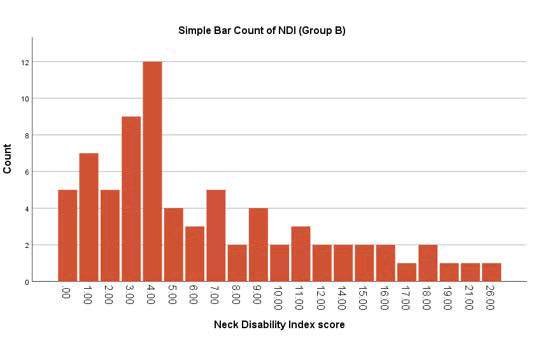
Fig. 5. Neck disability index score of group B.
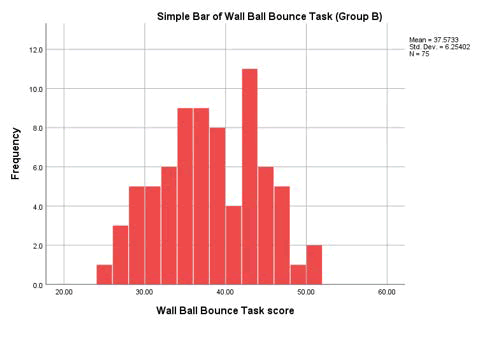
Fig. 6. Wall ball bounce task of group B.
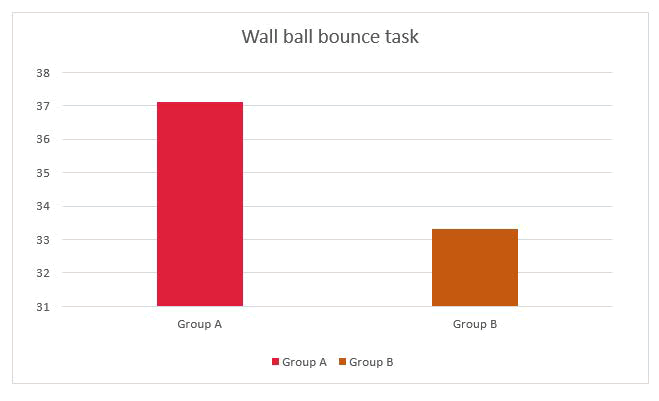
Fig. 7. Mean wall ball bounce task score of group A and group B.
Upper back and neck areas are strained more due to bending forward and looking at the smartphone, leading to musculoskeletal discomfort and reduced mobility of the neck. From the study it is evident that severe neck-related problems like cervical radiculopathy would affect hand-eye coordination, which is important to perform basic activities of daily living like writing. The study also adds that the hand-eye coordination is almost equal when compared between persons with non-specific neck pain and persons without neck pain, proving that hand-eye coordination is not affected by nonspecific neck pain.
As the evidence and knowledge about text neck syndrome are scarcely available, understanding about the condition is also less. Thus, this study was carried out to determine whether or not text neck syndrome compromises hand-eye coordination. Students between the ages of 18 and 30 were taken as the study population and were screened for text neck syndrome using the Smartphone Addiction Scale short version questionnaire and the Neck Disability Index. The students were divided into two groups, namely, Group A of students with text neck syndrome and group B of students without text neck syndrome. The hand-eye coordination is tested by wall ball bounce task, which was performed by all subjects, and the results were recorded [14,15].
The scores obtained were statistically analyzed, and the results obtained indicate that there is a significant reduction in the hand eye coordination of the students with text neck syndrome when compared with students who were not affected. This implies that text neck syndrome is a severe condition that can interfere with the affected person's daily life.
A study discussed that the muscles around the neck will be stiffened in text neck syndrome which makes the reaction time longer than usual. This supports the result of our study since hand eye co-ordination in subjects with text neck syndrome is reduced when compared to subjects without text neck syndrome due to reduced reaction time.
Prevention is the best approach to reduce the manifestation of the condition. Text neck syndrome can be prevented by reducing the use of smartphones, taking frequent breaks in between, maintaining proper posture while using smartphones, and making ergonomic corrections. Awareness should be delivered about the negative effects of smartphone addiction.
Since the available articles are not enough to understand Text neck syndrome, further research should be conducted to get more information about the pathophysiology and various effects of the condition.
Limitations
Wall ball bounce task being skill oriented, is difficult for some participants to do and the duration of 1 min also increasing the difficulty faced by the participants.
Conclusion
The study concluded that students with text neck syndrome have significantly lower hand-eye coordination when compared to students without text neck syndrome.
Acknowledgement
Primarily, I would like to thank the almighty, who showed his blessings in all walks of my life. I am highly indebted to my guide Mrs. G. Yasmeen Imtiaz , who took her real personal interest in providing me with proper guidance, encouragement and support at all levels. My entire effort stands credited at this moment only because of my family who whole-heartedly stood beside me always in each step of my career.
Conflict of Interest
Authors state no conflict of interest.
Disclosure Statement
No author has any financial interest or received any financial benefit from this research.
References
- Rodríguez-García AM, Moreno-Guerrero AJ, Lopez Belmonte J. Nomophobia: An individual’s growing fear of being without a smartphone a systematic literature review. Int J Environ Res Public Health. 2020;17:580.
[Crossref] [Google Scholar] [PubMed]
- Alsiwed KT, Alsarwani RM, Alshaikh SA, et al. The prevalence of text neck syndrome and its association with smartphone use among medical students in Jeddah, Saudi Arabia. J Musculoskelet Surg Res. 2021;5:266-272.
[Google Scholar]
- Kumari S, Kumar R, Sharma D. Text neck syndrome: the pain of modern era. Int J Health Res. 2021;11:161-165.
[Crossref] [Google Scholar]
- Ahmed S, Akter R, Pokhrel N, et al. Prevalence of text neck syndrome and SMS thumb among smartphone users in college-going students: a cross-sectional survey study. J Public Health. 2021;29:411-416.
[Crossref] [Google Scholar]
- Namwongsa S, Puntumetakul R, Neubert MS, et al. Effect of neck flexion angles on neck muscle activity among smartphone users with and without neck pain. Ergonomics. 2019;62:1524-1533.
[Crossref] [Google Scholar] [PubMed]
- Neupane S, Ali U, Mathew A. Text neck syndrome-systematic review. Imp J Interdiscip Res. 2017;3:141-148.
[Google Scholar]
- Vijayakumar M, Mujumdar S, Dehadrai A. Assessment of co-morbid factors associated with text-neck syndrome among mobile phone users. IJSRST. 2018;4:38-46.
[Google Scholar]
- Bottaro R, Faraci P. The association between upper disorders and psychological well-being and its implication in text neck syndrome: a systematic review. Clin Neuropsychiatry. 2022;19:280.
[Crossref] [Google Scholar] [PubMed]
- Candra R, Rasyid W, Asnaldi A, et al. Effect of hand-eye coordination on the capability of children object control. 2020.
[Google Scholar]
- Sittikraipong K, Silsupadol P, Uthaikhup S. Slower reaction and response times and impaired hand-eye coordination in individuals with neck pain. Musculoskelet Sci Pract. 2020;50:102273.
[Crossref] [Google Scholar] [PubMed]
- Abu El Kasem ST, Raoof NA, Kattabie OM, et al. Effect of forward head posture on sensorimotor integration. Int J Physiother. 2017;4:118-125.
[Google Scholar]
- Senthil KB, Subbaiah S, Arun B, et al. Comparison of hand eye coordination on individuals with and without cervical radiating pain. Biomedicine. 2022;42:359-362.
[Google Scholar]
- Kwon M, Kim DJ, Cho H, et al. The smartphone addiction scale: development and validation of a short version for adolescents. PloS One. 2013;8:e83558.
[Crossref] [Google Scholar] [PubMed]
- Vernon H, Mior S. The Neck Disability Index: a study of reliability and validity. J Manipulative Physiol Ther. 1991;14:409-415.
[Google Scholar] [PubMed]
- Irawan R, Lesmana HS. Validity and Reliability Testing on Eye Hand Coordination Basketball Players “Overhead and Under Arms Throw”. 2020.
[Crossref] [Google Scholar]