Research Article - (2026) Volume 14, Issue 1
Retrospective Study Compared the Outcomes of Laparoscopic and Open Gastric Resection for Gastric Cancer
Hassan A. Saad1*,
Azza Baz2,
Mohamed Riad1,
Mohamed E Eraky1,
Mohamed I Farid1,
Huda EM Said1,
Eid Rizk Elgammal3,
Mervat Harira1 and
Ahmed El-Sayed Yousef3
1Department of Clinical Pathology, Faculty of Medicine, Zagazig University, Zagazig, Egypt
2Department of Surgery, Alahrar Teaching Hospital, Zagazig University, Zagazig, Egypt
3Department of Surgery, AlAzhar University, Nasr, Cairo, Egypt
*Correspondence:
Hassan A. Saad, Department of Clinical Pathology, Faculty of Medicine, Zagazig University, Zagazig,
Egypt,
Email:
Received: 03-Dec-2024, Manuscript No. IPACR-24-15407 ;
Editor assigned: 05-Dec-2024, Pre QC No. IPACR-24-15407 (PQ);
Reviewed: 19-Dec-2024, QC No. IPACR-24-15407 ;
Revised: 10-Feb-2026, Manuscript No. IPACR-24-15407 (R);
Published:
17-Feb-2026
Abstract
The use of minimally invasive techniques has not attained the same widespread acceptance for the treatment of more advanced tumors, principally because of existing concerns about its feasibility Laparoscopy is rarely used to treat stomach malignancy. We compared the outcomes of laparoscopic gastrectomy with those of open surgery, and long term complication results evaluated. There is still a debate regarding whether one of these options is superior. We need to compare the primary and secondary outcomes of laparoscopic versus open gastrectomy in patients with locally advanced gastric cancer, therefore, complete acceptance as a legitimate therapy is hampered by the lack of thorough investigation of long-term oncological consequences, including recurrence and fatality.
Methods: We retrospectively evaluated patients who underwent laparoscopic ves open gastrectomy between February 2014 and November 2023. After collecting the database from the board sheet of our Zagzig University Hospital (throughout eight years), the patients were divided into two groups: Open surgery and laparoscopic surgery. Logistic regression was used to compare the 30-day full complications, mortality and long-term outcomes like recurrence rates and survival, which are crucial to comparing laparoscopic and open surgeries for advanced gastric cancer in both groups.
Results: The Risk Ratio (RR) and 95% Confidence Interval (CI) were calculated. For consistent results, the Mean Difference (MD) or Standardized Mean Difference (SMD) and 95% Confidence Interval (CI) were calculated. The meta-analysis was conducted using Review Manager 5.3 and STATA software. A total of 8,232 gastric cancer patients were divided into two groups based on the type of surgery they underwent: Open gastrectomy (n=7,450; 90.5%) and laparoscopic surgery (n=782; 9.5%). Preoperative measurement of risk variables was important (CI=0.45-0.82, p=0.001, Odds Ratio (OR) 0.61, 95% confidence interval). We found no significant differences in mortality between groups when the preoperative risk variable was measured (OR=0.74; 95% CI=0.32-1.72; p=0.481).
Keywords
Laparoscopic gastrectomy; Open gastrectomy; Laparoscopic perioperative outcomes; Gastric cancer
Introduction
Each year, more than 22,000 Americans are diagnosed with stomach cancer, and of those, roughly 11,000 go on to die from the disease [1]. Billroth invented surgical treatment for stomach cancer the 1880’s. Brigham was an American surgeon who first performed a total gastrectomy in 1898. In recent decades, initiatives have been developed to increase survival rates and reduce procedural invasiveness. Since Kitano first documented Laparoscopic Distal Gastrectomy (LDG) in 1992, its popularity has slowly increased owing to lower surgical morbidity. Owing to its greater complexity, total Laparoscopic Gastrectomy (LTG) requires longer time. The better the preoperative care, the better the outcome, as observed in gastric cancer patients for four decades.
Despite evidence, laparoscopic resection for stomach cancer is still uncommon. Many surgeons still favor open gastrectomy, possibly because they believe that the laparoscopic method is not as practical given the increased complications, port site infection recurrence, and decline in lymphatic dissection. This can be attributed to the surgeon's degree of comfort and the decreased laparoscopic difficulty. Similar to every process, LDG and LTG have learning curves. However, more patients with gastric cancer may experience better results and a higher quality of life, owing to the use of LDG and LTG [2,3].
According to a recent study, the overall decrease in the incidence of stomach cancer may be reversed owing to the rising rates of the disease among those aged <50 years [4,5].
Open Gastrectomy (OG) is the standard treatment for gastric cancer for a long time. In 1994, Kitano first reported the effectiveness of Laparoscopic Gastrectomy (LG) for the treatment of early stage stomach antrum cancer [6]. Then, because of little invasion, less blood loss, a shorter time spent using analgesics, and a quicker recovery, the use of LG for gastric cancer has experienced tremendous development and popularity over the past few decades [7-9]. The ability to visualize the operative field more clearly owing to laparoscopic surgery may enable surgeons to dissect lymph nodes, which is crucial for patient prognosis. However, prior research has indicated that fewer lymph nodes were extracted from gastric patients during LG than during OG. In addition, owing to intraabdominal hypertension and the adhesion of laparoscopic instruments, port site metastases and seeding during LG were unavoidable. In addition, although some studies have compared the secondary outcomes between the LG and OG groups, the complete acceptance of the treatment as a viable procedure is hampered by the absence of long-term oncological outcomes, such as recurrence and death. Therefore, opinions vary regarding whether LG is preferable to OG in patients with stomach cancer.
We aimed to compare the primary and secondary outcomes of laparoscopic versus open gastrectomy in patients with locally advanced gastric cancer.
Materials and Methods
From February 2015 to November 2022, we evaluated patients who underwent laparoscopic and open gastrectomy after collecting data from the board sheet of our Zagazig University Hospital and six specialist surgical institutes. The 8,232 patients were divided into two groups based on the type of surgery they underwent: Open gastrectomy (n=7,450, 90.5%) and laparoscopic surgery (n=782, 9.5%).
However, surgeons experienced in laparoscopic procedures have not completed the learning curve simultaneously, and not all surgeons of the team have achieved adequate performative skills in LG. Indeed, a certain proportion of cases, even if preponderants in the earlier period, were performed using the traditional open technique.
Demographic characteristics, overall morbidity, and sequelae were compared using two-sided t-tests for continuous variables and Chi-squared tests for categorical information. We compared risk factors before surgery in both categories.
Research approach
Until November 2022, the authors independently searched for knowledge from the database board sheets of the six specialist surgical hospitals. The combined search phrases used were "Abdominal neoplasms" OR "Intestinal neoplasms" OR "Stomach neoplasms" AND "Laparoscopy" AND "Gastrectomy" AND "Clinical trials".
Selection standards
Based on the following criteria:
Inclusion criteria: The inclusion criteria were as follows: Stomach adenocarcinoma with histologically confirmed endoscopic biopsy, clinical stage III (T3/4a, N+, M0) according to the 8th edition of the AJCC/UICC staging system, diagnosed using Computed Tomography (CT), Endoscopic Ultrasonography (EUS), laparoscopic exploration, and total laparoscopic gastrectomy.
We Excluded: The exclusion criteria were as follows: (1) Cancer of the esophagogastric junction; (2) Residual gastric cancer; (3) Malignant tumor history; (4) Emergency surgery due to complications (obstruction, bleeding, or perforation); (5) Robot-assisted gastrectomy; and (6) Incomplete clinical and pathological data.
Obtaining data and evaluating its quality: Data were collected from six specialist surgical hospitals in Egypt. The data included country of origin, study period, tumor stage, type of gastrectomy, lymph node dissection, number of OG and LG cases, study population characteristics (sex and age), follow-up, outcomes, and complications.
Procedure
Laparoscopic gastrectomy: Irrespective of the surgical method or tumor stage, D1+lymph node dissection was performed in individuals with concomitant disease and an average age of less than 70 years. The remaining patients had D2 lymphatic economy. The lymph nodes were dissected based on the Japanese guidelines for stomach cancer, lymph nodes were dissected. Gastrectomy through laparoscopy: Five trocars (Figure 1) were used in the French posture for the procedures (total and subtotal). Figure 1 depicts the procedure staff, tools, and locations of trocars. In each case, complete momentectomy was performed, and bursectomy was not performed. Following the directions below, an entire momentectomy and dissection of the lymph nodes were performed. Momentectomy revealed the presence of the gastrocolic ligament. The left gastroepiploic vessels were separated into the splenic corners. Dissections were performed of the right gastroepic and infrapyloric lymph nodes. The junction between the gastroduodenal and hepatic arteries was identified after tracking the gastroduodenal arteries at the back of the duodenum. Simultaneously, the supraduodenal region was transformed into a window for transactions. A 60 mm linear stapling was used for laparoscopic duodenal transection. Five suprasuodenal lymph nodes were excluded from the study. The right stomach artery was excised. Following the Japanese gastrointestinal cancer therapy recommendations, targeted lymph node dissection (D1+D2) was performed based on tumor location and additional considerations (age, comorbidity circumstance, etc.) using a harmonic scalpel. Each patient underwent perioperative gastroscopy to establish the borders of the procedures. A Rouxen-Y-style antecolic reconstruction was used in this study. Conventional gastroenteritis was created following subtotal gastrectomy using a 60 mm endo stapler from the back of the remaining stomach. A 60 mm endo stapler was used to carry out a jejunojejunostomy anastomosis 50 cm distally. In 3/0 cases, the stapler space was sealed in multiple layers. The specimen was removed through a small transverse incision above the pubis. Several distinct methods have been used to complete esophagogastrojejunostomy anastomoses during total gastrectomy. These stapling techniques use a transitional dual stapler, conventional stapler, and trans orally introduced anvil (OrVilTM; Covidien, Mansfield, MA, USA). In individuals who received junctions with straight staplers, the tissue specimen was removed using suprapubic mini-transverse incisions; in individuals who received anastomosis with circular staplers, the specimen was removed from a mini-incision in the upper left quadrant. A drainage tube was inserted in the abdomen of each patient.
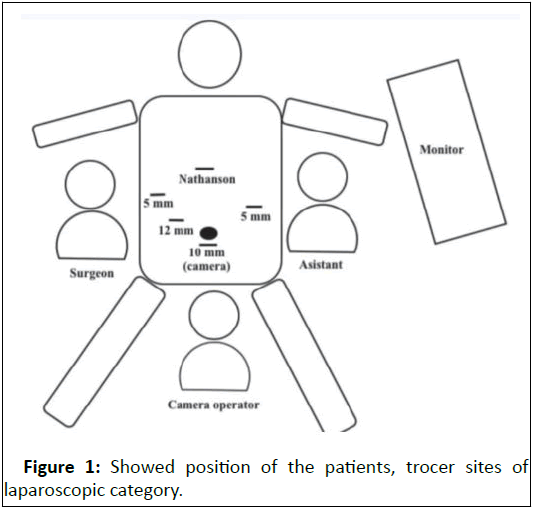
Figure 1: Showed position of the patients, trocer sites of laparoscopic category.
Open gastrectomy: The procedure involved lying down and making an incision along the midline extending below the umbilical cord. All the patients underwent total momentectomy; however, those who underwent D2 lymph node dissection also underwent bursectomy. The procedure for lymph node dissection was similar to that used for laparoscopic surgery. In partial gastrectomy, retrocolic Roux-en-Y or Billroth II reconstruction was performed, depending on the surgeon's choice, and Roux-en-Y reconstruction was performed the entire gastrectomy. A linear stapler was used for gastrojejunostomy, and an ordered stapler for esophageal jejunostomy. A single drainage tube was inserted into the abdomen of patients who underwent partial gastrectomy, and both tubes were placed in the abdomen of patients who underwent the entire gastrectomy.
Following surgery care: No nasogastric catheter was used in the laparoscopy group. In contrast, patients in the open surgery group frequently withdrew their nasogastric pipe on the primary or second day of recovery following the initial gas release. On the first, third, and fifth days, every patient underwent standard laboratory testing (hemogram, biochemistry, and CRP). Person food was initiated on the third day following the procedure in those who underwent subtotal gastrectomy via laparoscopic surgery, on the fourth day after surgery for individuals who underwent total subtotal gastrectomy via laparotomy surgery, on the following day for patients who underwent total gastrectomy, and on the third day after surgery for individuals whose intra-abdominal pathologists had not been determined based on clinical evaluation (both material investigation and laboratory) and were taken from the gastrointestinal drain. Individuals with sufficient oral nutrition and no medical condition were allowed to leave.
Patient information included age, sex, weight, Body Mass Index (BMI), prior abdominal surgical procedure status, concurrent diseases, American Society of Anesthesiologists (ASA) score, neoadjuvant medication status, tumor adaptation, procedure type (total or subtotal), (operative time, blood loss), morbidity, and histopathological examination findings of the specimen. The Clavien-Dindo classification was used to classify complications. The AJCC 8th edition was used for tumor staging in a previous study.
With preoperative risk factors considered: The 30-day mortality and comorbidity rates were assessed using a Logistic Regression (LR). LR was used to assess mortality and comorbidity in greater detail. Odds ratios (OR) and 95% Confidence Intervals (CI) for analyses that accounted for covariates and those that did not. In the univariate analyses, covariates that were substantially correlated with the outcome of the 50 levels were included. The variables used in all forwardbackward selection techniques were the same P.05. This was used to determine statistical significance. SAS version 9.2 was used for all calculations.
Results
A total of 8,232 gastric cancer patients retrospectively were divided into two groups based on the type of surgery they underwent: open gastrectomy (n=7,450; 90.5%) and laparoscopic surgery (n=782; 9.5%). Preoperative measurement of risk variables was important (CI=0.45-0.82 Odds Ratio (OR) 0.61, 95% confidence interval). We found no significant differences in mortality between subgroups when the preoperative risk variable was measured (OR=0.74; 95% CI=0.32-1.72; P=.481.
Patients characters and operative risk. No significant difference in blood coagulation or comorbidities and blood picture (Table 1).
| Continuous comorbidity factor |
Laparoscopy (n=782) |
Open (n=7,450) |
P |
| Age/years |
66.4 (12.81) |
66.7 (13.41) |
0.678 |
| BMI kg/m2 |
28.3 (6.61) |
26.6 (6.12) |
<.0001 |
| Height/meters |
1.7 (0.12) |
1.7 (0.11) |
0.082 |
| Comorbidities |
1.6 (1.21) |
1.8 (1.31) |
0.001 |
| Na |
139.5 (2.91) |
139.4 (2.91) |
0.382 |
| BUN |
16.5 (7.12) |
16.1 (8.01) |
0.313 |
| Creatinine |
1.0 (0.61) |
1.0 (0.62) |
0.616 |
| Alb |
3.9 (0.52) |
3.7 (0.71) |
<.0001 |
| Total bill |
0.6 (0.41) |
0.6 (0.71) |
0.201 |
| AST |
25.9 (14.31) |
25.7 (19.32) |
0.821 |
| Alpha |
79.8 (46.02) |
82.2 (44.01) |
0.405 |
| WBC |
6.7 (2.22) |
7.0 (2.91) |
0.014 |
| Hematocrit |
37.7 (5.01) |
36.0 (5.51) |
<.0001 |
| Platelet count |
245.1 (80.62) |
257.5 (98.72) |
0.006 |
| PTT |
29.4 (5.62) |
29.5 (5.61) |
0.692 |
| INR |
1.0 (0.21) |
1.1 (0.32) |
0.187 |
| PT |
12.7 (2.92) |
12.5 (2.41) |
0.496 |
| Note: A unit other than the mean (SD) was used to convert data when one was not accessible. Statistically significant differences between groups are shown in bold. |
Table 1: Demographic and operative risk comorbidities.
Demography of both group with operative variable Table 1.
According to risk factors, contrasting with the open surgery category, the laparoscopic group had a considerably more substantial BMI (28.3 kg/m2 vs. 26.6 kg/m2 P<.0001), a higher album level (3.9 vs. 3.7; P<.0001), a lower hematocrit (37.7 vs. 36.0; P<.0001), a lower level of complexity (1.6 vs. 1.8; P=.001), and preoperative WBC (6.7 vs. 014; P=.014) and platelet (245.1 vs. 257.5; P=.006) numbers. For the preoperative fatality risk variables, the laparoscopic category had decreased weight (10.5% vs. 16.0%; P=.004) as well as additional radiation exposure (5.0% vs. 2.4%; P=0.010). Wound infection in laparoscopic 0.5% but in open 8%, BMI 28.3 in laparoscopic but 26.6 in open.
Table 2 present preoperative comorbidities, no significant in short breath and cardiac complication but history of MI in laparoscopic was category 0.4% while in open was 0.9%, no oesophogesl varies in laparoscopic group.
| Categorical comorbidity Factor |
Laparoscopy (n=782) |
Open (n=7,450) |
P |
| Short breath syndrome |
36 (9.2) |
440 (11. 8) |
0.126 |
| COPD |
17 (4.3) |
210 (5.6) |
0.288 |
| Pneumonia |
0 (0) |
12 (0.2 |
0.461 |
| Ascites |
2 (0.3) |
68 (0.9) |
0.178 |
| Esophageal varices |
0 (0) |
10 (0.2) |
0.501 |
| History of CHF |
10 (1.3) |
64 (0.9) |
0.403 |
| MI history |
2 (0.4) |
54 (0.9) |
0.363 |
| PCI history |
40 (7.1) |
852 (7.9) |
0.633 |
| Cardiac surgery |
44 (7.8) |
624 (6.8) |
0.539 |
| Angina |
0 (0) |
26 (0.7) |
0.148 |
| Hypertension |
466 (59.6) |
4,168 (55.9) |
0.167 |
| PVD |
8 (1.4) |
112 (1.8) |
0.645 |
| Rest pain |
0 (0) |
10 (0.2) |
0.501 |
| CRF |
4 (0.5) |
50 (0.7) |
0.710 |
| CVS |
3 (1.1) |
60 (1.0) |
0.868 |
| TIA history |
14 (2.5) |
190 (3.0) |
0.595 |
| CVA |
18 (3.2) |
166 (2.7) |
0.600 |
| CNS mass |
0 (0) |
4 (0.1) |
0.671 |
| Paraplegia |
0 (0) |
12 (0.2) |
0.461 |
| Wound infection |
4 (0.5) |
56 (8) |
0.595 |
| On steroids |
12 (1.5) |
466 (2.1) |
0.457 |
| Weight loss |
82 (10.5) |
1,190 (16.0) |
0.004 |
| Bleeding disorder |
20 (2.6) |
294 (3.9) |
0.173 |
| Chemotherapy |
30 (5.3) |
446 (7.2) |
0.248 |
| Radiotherapy |
48 (5.0) |
150 (2.4) |
0.010 |
| Reported |
12 (2.2) |
80 (1.4) |
0.241 |
| Note: Data are presented as number of patients (% of the entire group). |
Table 2: Pre-surgery comorbidities in each category
Table 3 presents a list of operative difficulties and tumor localization. The overall 30-day laparoscopic complication rate was 21.0%, but the open group rate was 32.8% (P.0001). Adverse effects occur more often during open surgery, re-anesthesia, urinary sepsis, septicemia, and septic shock. There were no significant differences in other co-morbidity, including wound site infection, Pulmonary Embolism (PE) and resurvey. There was no significant difference between the groups in terms of mortality (p= 0.100) (Table 4).
| Variable |
Open (n=782) |
Laparoscopic (n=7,450) |
p-value |
| Tumor location |
| Proximal 1/3 |
391 (50.0%) |
322 (43.3%) |
0.909 |
| Middle 1/3 |
78 (10.0%) |
124 (16.7%) |
| Lower 1/3 |
287 (36.7%) |
273 (36.7%) |
| Remnant |
26 (3.3%) |
245 (3.3%) |
| Gastrectomy type |
| Total |
495 (63.3%) |
4,470 (60.0%) |
1 |
| Subtotal |
287 (36.7%) |
2,980 (40.0%) |
| Dissection type |
| D1 |
156 (20.0%) |
1,616 (21.7%) |
0.794 |
| D2 |
625 (80.0%) |
5,833 (78.3%) |
| Reconstruction type |
| Roux-en-Y |
678 (86.7%) |
7,450 (100%) |
0.112 |
| Billroth-II |
104 (13.3%) |
0 (0%) |
| Operation time (min) |
180 (163.8–192.5) |
297.5 (257.5–310.0) |
<0.05 |
| Blood loss (mL) |
150 (100–200) |
50 (50–100) |
<0.05 |
Table 3: Tumor localization and operative data on patients.
| Variable |
Open (n=782) |
Laparoscopic (n=7,450) |
p-value |
| Postoperative complications |
| No |
312 (40.0%) |
2,257 (30.0%) |
0.589 |
| Yes |
469 (60.0%) |
5,267 (70.0%) |
| Clavien–Dindo classification |
| |
182 (23.3%) |
1,735 (23.3%) |
0.642 |
| ≥ Grade III |
130 (16.7%) |
499 (6.7%) |
| Re-operation |
104 (13.3%) |
0 (0%) |
0.112 |
| Mortality |
52 (6.6%) |
49 (6.6%) |
1 |
| Anastomotic leakage |
4 (3.3%) |
3 (2.5%) |
0.5 |
| Duodenal stump leakage |
3 (2.5%) |
1 (0.8%) |
0.142 |
| Total leakages (anastomotic+duodenal stump) |
7 (5.8%) |
4 (3.3%) |
0.072 |
| Anastomotic bleeding |
1 (0.8%) |
1 (0.8%) |
1 |
Table 4: Operative mortality and outcomes.
The worldwide rates of anastomotic and duodenal stump leakage were generally greater in the LG group (5.8% vs. 3.3%), the difference was not statistically significant difference seen (p=0.072). In particular, two patients in the laparoscopic group experienced a Clavien-Dindo grade III complication for surgical leakage (one duodenal stump and one gastro-jejunal), one patient experienced a Clavien-Dindo grade IV complication for esophageal-jejunal anastomosis leakage (requiring ICU intensive care unit management), four patients died within 30 days of the in-hospital course (Clavien-Dindo grade V) for septic complications following (n=2) esophageal-jejunal anastomosis leakage and (n=2) duodenal stump leakage; two patients in the open group experienced Clavien-Dindo grade III complication (one duodenal stump and one esophageal–jejunal anastomosis leakage), and two patients died from Clavien Dindo grade V septic complications leakage (oesophogo jejunal anastomosis).
Clavien-Dindo grade II–III problems are the most common worldwide. Regarding serious problems (Clavien-Dindo Grade III), there were no discernible differences between the two groups (10.8 vs. 11.7%; p=0.625).
Nutritional and immuno-inflammatory state during surgery
We gathered perioperative laboratory data to assess the nutritional and immune-inflammation status of patients during the perioperative phase in order to fully determine the impact of various surgical techniques on LAGC patients after NC. Red Blood Cells (RBCs) and Hemoglobin (Hb) were calculated, and the results showed that the LG group had less reduced Hb (P=0.018) and RBCs (P=0.039) in the three days following surgery (Figure 2A,B), confirming that the LG group had lost less blood than the OG group during the procedure. This could be explained by the fact that laparoscopic surgery results in more accurate hemostasis, a smaller incision, and an improved view of the anatomical structures. The reduced Alb was also computed, and it was discovered that the LG group had less of it at one day (P=0.029), three days (P=0.015), and seven days (P=0.035) after surgery (Figure 2D). Because of its short half-life, PAB is a useful biomarker of short-term nutritional status. According to our findings, the LG group's lowered PAB three days after surgery was lower (P=0.010) (Figure 2E). According to the foregoing findings, LG has less of an adverse effect on LAGC patients' nutritional status than NC. The SIRI and SII are widely accepted markers of a patient's immune-inflammatory condition. After calculating the SIRI and SII prior to surgery, as well as one, three, and seven days thereafter, we did not find any significant difference between the groups.
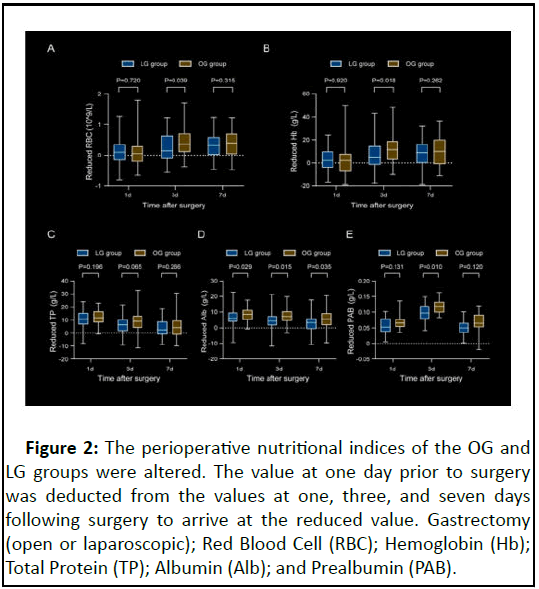
Figure 2: The perioperative nutritional indices of the OG and LG groups were altered. The value at one day prior to surgery was deducted from the values at one, three, and seven days following surgery to arrive at the reduced value. Gastrectomy (open or laparoscopic); Red Blood Cell (RBC); Hemoglobin (Hb); Total Protein (TP); Albumin (Alb); and Prealbumin (PAB).
Table 5 presents the postoperative mortality and second complications. The overall 30-day laparoscopic complication rate was 21.0%, but the open group rate was 32.8% (P.0001).
Mortality was 3.7% for open procedure while 2% for laparoscopic approach.
| Complications |
Laparoscopic (n=782) |
Open (n=7,450) |
P |
| Death |
16 (2.0) |
274 (3.7) |
0.096 |
| Wound infection |
10 (1.3) |
128 (1.7) |
0.520 |
| Wound defence |
6 (0). 8) |
106 (1.4) |
0.287 |
| Pneumonia |
26 (3.3) |
516 (6.9) |
0.006 |
| Reintubation |
20 (2.6) |
380 (5.1) |
0.026 |
| PE |
6 (0). 8) |
82 (1.1) |
0.542 |
| Renal failure |
0 (0) |
22 (0.3) |
0.282 |
| Renal insufficiency. |
8 (1.0) |
26 (0.6) |
0.345 |
| UTI |
16 (2.0) |
312 (4.2) |
0.39 |
| Cardiac arrest |
6 (0). 8) |
86 (1.2) |
0.489 |
| MI |
4 (0.5) |
88 (1.2) |
0.231 |
| Transfusion |
12 (1.5) |
170 (2.3) |
0.39 |
| DVT |
10 (1.3) |
112 (1.5) |
0.727 |
| Sepsis |
26 (3.3) |
512 (6.9) |
0.007 |
| Septic shock. |
14 (1). 8) |
332 (4.5) |
0.012 |
| Return to OR. |
48 (6.1) |
546 (7.3) |
0.387 |
| Note: The 30-day mortality rates after surgery were 3.7% and 2.0% in laparoscopic surgery (P=0.096). |
Table 5: Thirty-day mortality and secondary complications.
The percentage of the whole group of patients who experienced each complication was used to express data.
Statistically significant differences between the research groups are shown in bold. Deep vein thrombosis, myocardial infarction, pulmonary embolism, operating-room infection, urinary tract infection
Laparoscopic gastric resection resulted in significantly fewer complications than open gastric resection (OR 0.54; 95% CI=0.42-0.70; P.M.001). This estimate was only marginally reduced after controlling for preoperative comorbidities, such as high BMI (OR 0.61; 95% CI=0.45-0.82; P.001). There was no statistically significant difference in mortality between laparoscopic and open gastric resection when preoperative risk variables were considered (OR 0.74, 95% CI). CI=0.32–1.72; P=. 481.
A higher number of patients in the OG group received adjuvant chemotherapy those in the LG group (79.9% vs. 65.3%) Additionally, the laparoscopic approach seemed to lower inadequate lymphadenectomy rates (OG 15.1% vs. LG 7.7%, p<0.04) (Table 6).
|
|
Open (n=7,450)
|
Laparoscopic (n=782)
|
STDEV
|
p
|
|
Adjuvant chemotherapy
|
508 (67.9)
|
40 (51.3)
|
0.44
|
0.099
|
|
0.707
|
|
Lymph nodes retrieved*
|
15.1 (50–4)
|
18.7 (36–10)
|
4.498
|
<0.031
|
|
14.142
|
|
Lymph node count <15: n (%)
|
1125(15.1)
|
60 (7.7)
|
6.561
|
<0.04
|
|
8.176
|
|
Note: *Data represent the median (range)
|
Table 6: Primary and oncological outcome of the two groups.
Discussion
In patients with stomach cancer, our study showed that laparoscopic gastric surgery had fewer complications than open surgery did. This finding is consistent with the findings of metaanalyses and prior institutional experts. Urinary tract sepsis, pneumonia, reintubation, sepsis, and septic shock are specific problems that are less common after laparoscopic surgery. A low rate of comorbidity occurred with laparoscopic gastric surgery even with a high BMI. In addition, there was no statistically significant difference in the mortality between the laparoscopic and open gastrectomy groups. Literature on laparoscopic versus open gastric resection supports lower morbidity in both LDG and LTG. According to Zeng et al., among 3411 cases, LDG caused less postoperative morbidity than ODG per year. risk=0.58; P. 00001). Additionally, Lee and Han found that the ODG group experienced postoperative pulmonary difficulties at a higher rate than the LDG category (P=043). Reported a meta-analysis of 2313 patients comparing LTG to OTG and found that LTG had decreased postoperative morbidity (R.=0.79; P=0.007). Although the majority of patients are Asian, Western nations have also shown a decline in morbidity.
Another study involving 174 patients, 50% treated with laparoscopic surgery and 50% treated with open surgery, encompassing both distal subtotal gastric resections, was published by Kelly et al. I2010 Early was (27% vs. 16%), and later was (17% vs. 7%). Postsurgical duration and laparoscopic gastrectomy are associated with fewer mild concerns (P.01). The majority of comorbidities and 30-day mortality rates were comparable between groups. Both studies reported that laparoscopic intervention has better outcomes than open gastrectomy in terms of comorbidity, but does not differentiate distal and whole gastrectomy outcomes due to the restrictions imposed by CPT coding.
In comparison with open gastric cancer resection, we found that laparoscopic surgery resulted in a 30-day morbidity rate that was 11.8% lower (32.8% open and 21.0% laparoscopic). In addition to the short-term consequences mentioned in that study, this difference adds to long-term life complications, including delays in delaying self-activity and returning to work. Quality of life was not assessed in a previous study. Additionally, the database did not directly evaluate the impact of comorbidities on healthcare expenses after these surgeries. When comparing the morbidity of these two procedures, it is crucial to consider both the outcomes and overall increase in healthcare expenses.
In this study and in the literature, there were no significant differences in the mortality rates between the two groups. Compared 162 participants in a meta-analysis of four studies on LDG. There was no statistically significant difference in the fatality rates between the LDG and ODG groups (OR=0.94; P=0.936). Similar outcomes have been observed after complete gastrectomy. In a theeta-analysis of LTG versus OTG, reported that the mortality rates for LTG and OTG were similar in 8 investigations (0.9 and 1.8%, respectively). In a meta-analysis of 15 studies, Xiont, et al. supported these results, noting that LTG and OTG had comparable facilities (OR=0.74; P=0.61).
This report emphasizes the infrequent use of laparoscopy for the management of stomach malignancies. Only 10% of the stomach resections in the NSQIP database were performed laparoscopically. The dataset cannot reveal the causes that led surgeons to conduct open gastric resection instead of laparoscopic resection; however, the choice may have been influenced by individual laparoscopic training and experience, as well as patient-specific factors. To account for variations in comorbidities, modifications were made to the data analysis section. The database also made it impossible to estimate the proportion of centers that underwent laparoscopic or open surgery. This information would be useful in determining barriers to laparoscopic surgery utilization in specific centers, which could lead to improved outcomes. The types of laparoscopic resection permit comparison of partial, distal, and total gastrectomies and do not differ in classification from open procedures. In contrast to the role of laparoscopic stomach surgeries for benign conditions, such as sleeve gastrectomy or bypass, the rate of laparoscopic utilization for stomach cancer is rare. Although the Roux-en-Y gastric bypass technique is challenging, >90% of these procedures are performed laparoscopically. The increased rate of laparoscopic surgery in gastric surgery forced surgeons to use it in malignant conditions as the field became more familiar with it, and a wide spread of training conferences also played a role in the widespread use of laparoscopic surgery.
The RCTs are summarized in Table 7. These RCTs, which included 5204 patients (50.3% of whom underwent LG), were published between 2002 and 2018. The demographics and clinicopathological traits of patients in the LG and OG groups in each study were the same. Five experiments were carried out in Japan, three in Korea, eight trials were undertaken in China, and one in Italy. Patients with Advanced Gastric Cancer (AGC) were enrolled in another six trials, whereas patients with Early Gastric Cancer (EGC) were included in six studies. In nine studies, distal gastrectomy was used. Figure 3 displays the findings of the methodological quality assessment of each risk of bias component for each included trial.
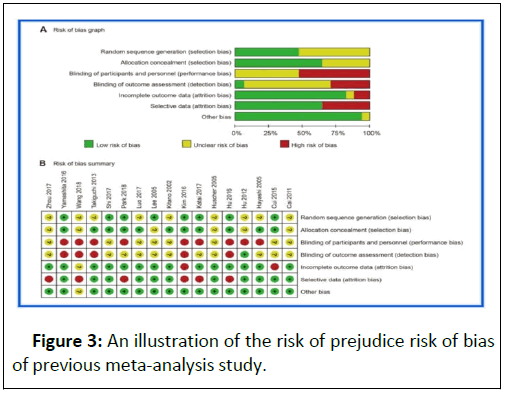
Figure 3: An illustration of the risk of prejudice risk of bias of previous meta-analysis study.
| Author (Year) |
Country |
Study period |
Tumour stage |
Gastrectomy type |
LAND |
Group |
Cases |
Age (years) |
M/F |
Follow-up (months) |
| Kitano (2002) |
Japan |
1998.11–2001.3 |
EGG |
DG |
NA |
LG OG |
14 14 |
63.2 60.1 |
9/5
8/4 |
24.3
18.8 |
| Hayashi (2005) |
Japan |
1999.12–2001.11 |
EGG |
DG |
D1 |
LG OG |
14 14 |
56
62 |
9/4
13/1 |
39
45 |
| Huscher (2005) |
Italy |
1992.11–1996.2 |
EGC, AGC |
DG |
D1, D2 |
LG OG |
30
29 |
63.2 63.6 |
18/12
21/8 |
52.2
49.7 |
| Lee (2005) |
Korea |
2001.11–2003.8 |
EGG |
DG |
D2, DSL |
LG OG |
24 23 |
56.6 59.5 |
11/13
15/8 |
14
14 |
| Cai (2011) |
China |
2008.3–2009.12 |
AGE |
PG, DG, TG |
D2 |
LG OG |
49 47 |
60.2 60.3 |
39/10
37/10 |
22.1
22.1 |
| Hu (2012) |
China |
2009.1–2011.5 |
EGC, AGC |
DG |
NA |
LG OG |
41 41 |
60.9 64.3 |
20/21
21/20 |
01
01 |
| Takiguchi (2013) |
Japan |
2003.7–2006.1 |
EGG |
DG |
D1 |
LG OG |
20 20 |
61.5 62.5 |
12/8
13/7 |
60
60 |
| Cui (2015) |
China |
2010.11–2012.9 |
EGC, AGC |
PG, DG, TG |
D2 |
LG OG |
128 142 |
60.1 57.5 |
88/40
98/44 |
01
01 |
| Hu (2016) |
China |
2012.9–2014.12 |
AGE |
DG, TG |
D2 |
LG OG |
519 520 |
56.5 55.8 |
380/139 346/174 |
01
01 |
| Kim (2016) |
Korea |
2006.2–2010.8 |
EGC, AGC |
DG, TG |
D1, D2 |
LG OG |
644 612 |
56.8 57.8 |
425/219 412/200 |
01
01 |
| Yamashita (2016) |
Japan |
2005.11–2008.2 |
EGG |
DG |
DSL |
LG OG |
31 32 |
58
61 |
17/14
25/7 |
63
63 |
| Luo (2017) |
China |
2008.5–2012.4 |
AGE |
DG |
D2 |
LG OG |
62 62 |
64.0 64.0 |
42/20
43/19 |
36
36 |
| Zhou (2017) |
China |
2012–2015 |
EGG |
PG, DG, TG |
D1, D2 |
LG OG |
100 100 |
53.2 53.1 |
50/50
50/50 |
60
60 |
| Shi (2017) |
China |
2010.1–2012.6 |
AGE |
PG, DG, TG |
D2 |
LG OG |
162 160 |
55.2 55.0 |
122/40
105/55 |
01
01 |
| Katai (2017) |
Japan |
2010.3–2013.11 |
EGC, AGC |
DG, PPG |
D1, D2 |
LG OG |
457455 |
63
64 |
289/173 275/184 |
01
01 |
| Wang (2018) |
China |
2014.3–2017.8 |
AGE |
DG, TG |
D2 |
LG OG |
222220 |
59.4 60.6 |
144/78 133/87 |
01
01 |
| Park (2018) |
Korea |
2010.6–2011.11 |
AGE |
DG |
D2 |
LG OG |
100 96 |
58.6 60.1 |
69/31
65/31 |
38.2
38.2 |
Table 7: Baseline characteristics of studies included in the meta-analysis.
In the majority of studies comparing traditional and laparoscopic gastrectomy, the length of surgery in LG was greater regardless of tumor stage (early or advanced). In our study, typical total omentectomy was performed. However, the duration of omentectomy has not yet been reported. However, omentectomy greatly increases the length of the procedure, particularly laparoscopic procedures. This may be due to the wide distribution of momentum in the transverse plane of the abdomen and the fixed placement of trocars and devices during the laparoscopic procedure. The average length of the procedure was estimated to be 258–278 minutes in research from nations where laparoscopic gastrectomy occurs more frequently. Omentectomy was not utilized as a normal procedure during these investigations, and extracorporeal repair was carried out. In our study, the average length of the laparoscopic procedure was 283 min. In each case, a complete omentectomy and intracorporeal repair were performed. In light of these findings, we found that the procedure duration was comparable to that of clinics where laparoscopic gastrectomy is frequently performed.
According to randomized controlled studies and metaanalyses, laparoscopic and open gastrectomy procedures have comparable morbidity and mortality rates. In our investigation, there was no discernible disparity in morbidity or death between the two procedures. Geographical disparities in terms of death and morbidity rates have been reported in previous studies. In contrast to research from Europe, the morbidity and mortality rates reported in Asian studies were comparatively modest. In this study, the incidence of significant difficulties, particularly in laparoscopic gastrectomy (Clavien Dindo grade 3), was comparable to that in Asian studies [6-8]. The mortality rate in our study was significantly higher than those reported in previous studies. This finding could be explained by the local location of the tumor and the most severe stage. Studies in European nations have reported identical death rates with tumor features in our patient population. Gastrectomy may have had an impact on the rates of mortality and morbidity in the open approach group. This should be considered when assessing outcomes.
Similar to the death and morbidity rates, the conversion rate from laparoscopic to open surgery may vary by region. While Asian studies have revealed conversion rates ranging from 6.4% to 6.6%, European studies [9], have reported conversion rates of 18%. In our study, 10% of the procedures were converted to open surgeries. When the learning curve and the small number of cases are considered, this rate seems reasonable.
The percentage of R0 resections and quantity of lymph nodes removed were crucial markers of operational effectiveness.
Our study highlights a significant number of lymph-nodes retrieved with the laparoscopic approach, with a reduced rate of inadequate lymphadenectomies (<15 lymph nodes retrieved): this result is controversial, since surgery has been performed by the same experienced surgeons and according to consolidated technical protocols. It can be supposed that laparoscopy, even if more difficult and challenging to perform, allows better visualization of anatomical structures with more effective resections along the vessels and anatomical planes.
These variables were comparable between the two groups when the efficiency of the two procedures was examined. Identifying the location of the tumor and incision margin may be challenging during laparoscopy because of the lack of tactile sense. The observed 6.9–7.5% tumor positive surgical margin rate in minimally invasive gastrectomy. In our investigation, standard perioperative gastroscopy was used to assess tumor location and surgical margins in the laparoscopic group. This strategy may be the key to obtaining a tumor-free therapeutic border.
There is disagreement over the width of the lymph node dissection. In Asia, D2 lymphadenectomy is the preferred method for treating >T1 tumors since it has been demonstrated to be more successful than D1 lymphadenectomy.
Although the percentage of duodenal stump and anastomosis leakage was statistically equivalent between the two groups, it was evident that the laparoscopic technique resulted in a larger percentage. This type of event affected seven (5.8%) of our patients in LG, where it resulted in four deaths from successive septic aggravation, compared to 3.3% in the OG group (4/120 patients) and two deaths as a result. On the other hand, we did not find any anastomotic structural complications, which may be due to their latency and thus difficult to identify with such shortterm (30 days post-operative) research. Furthermore, an RCT conducted in the east revealed that anastomotic leakage was more common in patients with AGC after laparoscopic distal gastrectomy than in thosed who underwent open distal gastrectomy. However, compared with earlier high-quality Asian trials (anastomotic and duodenal stump leakage ranging between 1.4% and 3.7% in LG and 0% and 2.0% in OG; postoperative mortality rates ranging between 0.0% and 0.4% in LG and 0.0% and 1.0% in OG), the percentages of anastomotic leakage in the current study, along with the overall mortality rates (4.2% in LG and 3.3% in OG), tended to be higher than those reported in previous high-quality Asian trials. For instance, Moisan et al. observed 12.9% and 6.4% in the corresponding laparoscopic and open groups, and Huscher et al. reported an incidence of 11% in patients undergoing laparoscopic gastrectomy. Reduced rates of anastomotic leakage (2.6% in the laparoscopic group, 2.6% in the robotic group, and 3.6% in the open group, with no statistical difference between the groups, p=0.78) were found in another recent Italian propensity scorematched case-control study which compared robotic gastrectomy vs. laparoscopic gastrectomy versusvs. open gastrectomy. However, the study's cohort also included a preponderance of patients with early-stage gastric cancer (56.3%). Our findings on mortality are consistent with those of previous Western studies. Husher: 7% of laparoscopic gastrectomies, and subsequently reported 3.3% and 6.7% death rates in the laparoscopic and open groups, respectively, in an RCT of 2005. Lower percentages of mortality-2.0% and 1.4%, respectively in LG and OG were reported by Orsenigo et al. Similar results were found in two recently published European multicenter RCTs comparing the efficacy of laparoscopic versus open gastrectomy for gastric cancer: The Logica trial reported rates of anastomotic leakage in the laparoscopic and open groups of 8.7% and 10.0%, respectively, and 30-day postoperative mortality in the laparoscopic and open groups of 4.3% and 6.4%, respectively. anastomotic leakage rates in the minimally invasive group of the stomach study was 8.5%, but in the open group, it was 10.2%. However, the 30-day postoperative mortality data not available.
Compared to more recent, larger RCTs, the current study's drawbacks include the relatively small sample size of recruited individuals. Second, even though the information was gathered prospectively and rigorous matching of the possible confounding factors was carried out, the retrospective nature of the study may have limitations. To prevent any selection bias, we included all consecutive patients who satisfied the inclusion criteria. The propensity-matched method was also used to confirm that the clinical-pathological characteristics (age, sex, BMI, comorbidity, ASA, adjuvant therapy, tumor location, type of gastrectomy, and pT stage) were evenly distributed between the two groups. Distinct surgical instruments, varying surgical preferences (such as anastomosis and reconstruction types), varying surgical skill levels attained by the surgeons (learning curve), potential inconsistencies in the perioperative patient management procedures (such as the criteria for discharge, the point at which complications are detected, and how they are managed), and distinct pathologists who examined the tumoral specimen. This could potentially introduce inherent prejudice. However, it should be noted that the two facilities where this operation was completed were owned by the same health company (Central Tuscany Local Health Company, Italy). Surgical treatment was performed in accordance with established standards).
LG was not less effective than OG in treating LAGC. Our investigation showed that, in terms of the oncological results of LG for LAGC following the administration of NC, LG was similar to OG in terms of the effectiveness of reducing tumor markers as well as long-term RFS and OS, which is in line with other publications in the literature. Furthermore, it is uncertain whether adjuvant chemotherapy administered after surgery enhances the prognosis of LAGC following NC. According to our findings, the OS of patients with LAGC after NC was independently affected by the lack of postoperative adjuvant chemotherapy. Consequently, maximizine the chances of survival after NC.
Even if we included T4a-4b tumors (serosa involvement), another restriction is that we did not perform cytological investigation of peritoneal washes. This might be connected to an increased chance of peritoneal recurrence; however, a longterm survey is needed to clarify this. The use of Laparoscopic Surgery (LG) to treat gastric cancer has grown in the historically underdeveloped West, including the United States, Europe, and other nations. However, there is currently a dearth of literature pertaining to western populations. The capacity to evaluate and contrast outcomes resulting from laparoscopic open surgery could be improved by adding preoperative care and better inside the database.
The lack of data on the degree of lymph node invasion, dissection, and chemotherapy is a limitation of this study. The oncological effects of laparoscopic and open surgeries have been discussed in other studies. It was impossible to detect stomach cancer resection using the database used in this study. This dataset did not include information such as histopathological tumor characteristics, however, the data were useful for detecting variations in results through preoperative morbidity and healthcare.
Conclusions
According to our analysis, LG and OG were equivalent in terms of major results, with LG having some benefits in terms of secondary outcomes. This suggests that LG is preferable to OG in patients with stomach cancer. Capacity to evaluate and compare outcomes of laparoscopic and open surgery.
Acknowledgments
Not applicable.
Ethical Approval and Consent to Participate
Ethical approval was obtained from Zagagic University, Faculty of Medicine, Zagazig University Institutional of Health Research Ethics (ZUIHRE), informed consent needed to be waived for three reasons: First, the study lasted a long time; Second, it does not involve patient privacy information; In addition, this was a retrospective study and it did not interfere with treatment decisions, according to national regulations, and with the Declaration of Helsinki.
Consent for Publication
Not applicable.
Availability of Data and Materials
The database used and or analysis is available with the corresponding author upon reasonable request. All the authors have shared and approved the database and final version.
Competing Interests
The authors declare that they have no competing interests or financial disclosures.
Funding
No specific funds were received for this study.
References
- Siegel R, Ma J, Zou Z, Jemal A (2014) Cancer statistics. CA Cancer J Clin 64: 9-29
[Crossref] [Google Scholar] [PubMed]
- Billroth T (1881) Offenes schreiben an Herrn Dr L. Wittelschofer. Wien Med Wochenschr 31: 162-165
- Brigham CB (1898) Case of removal of the entire stomach for carcinoma; successful esophagoduodenostomy: Recovery. Boston Med Surg J 138: 415–419
[Google Scholar]
- Kitano S, Iso Y, Moriyama M, Sugimachi K (1994) Laparoscopy-assisted Billroth gastrectomy. Surg Endosc 4: 146-148
[Google Scholar] [PubMed]
- Siegel R, Naishadham D, Jemal A (2012) Cancer statistics, 2012. CA Cancer J Clin 62: 10-29
[Crossref] [Google Scholar] [PubMed]
- Lee JH, Han HS (2005) A prospective randomized study comparing open vs. laparoscopy-assisted distal gastrectomy in early gastric cancer: Early results. Surg Endosc 19: 168–173
[Crossref] [Google Scholar] [PubMed]
- Huscher CG, Mingoli A, Sgarzini G (2005) Laparoscopic versus open subtotal gastrectomy for distal gastric cancer: Five-year results of a randomized prospective trial. Ann Surg 241: 232–237
[Crossref] [Google Scholar] [PubMed]
- Zeng YK, Yang ZL, Peng JS, Lin HS, Cai L (2012) Laparoscopic-assisted versus open distal gastrectomy for early gastric cancer: Evidence from randomized and nonrandomized clinical trials. Ann Surg 256: 39-52
[Crossref] [Google Scholar] [PubMed]
- Wang W, Zhang X, Shen C, Zhi X, Wang B, et al. (2014) Laparoscopic versus open total gastrectomy for gastric cancer: An updated meta-analysis. PLoS One 9: e88753
[Crossref] [Google Scholar] [PubMed]
Citation: Baccouche S, Baz A, Riad M, Eraky ME, Farid MI, et al. (2025) Retrospective Study Compared the Outcomes of Laparoscopic and Open Gastric Resection for Gastric Cancer. Archives Can Res Vol:13 No:1